The future of aircraft turnaround is becoming increasingly connected, data-driven, and automated.
Last month, we shared a look ahead at Synaptic Aviation’s participation in Future Travel Experience (FTE) Global 2026 and the growing conversation around the smart apron.
Now, following the event, one theme stands out: making the smart apron a reality is about more than automation alone. It requires the operational visibility, shared data, and industry collaboration needed to make automation useful in the real-world ramp environment.
On September 9, Justin Kester, VP–Global Sales at Synaptic Aviation, joined aviation leaders for the Future Airports Conference session, “Towards the Smart Apron: Automating the Turnaround Process.”
Moderated by Max Gosney, Managing Director of Future Travel Experience, the panel brought together perspectives from Southwest Airlines, Airbus, dnata USA, Synaptic Aviation, and nlmtd to explore where smart apron technology stands today—and what comes next.
Where Is the Smart Apron Today?
The discussion examined how much progress the industry has already made toward smarter, more automated apron operations and where the greatest opportunities remain.
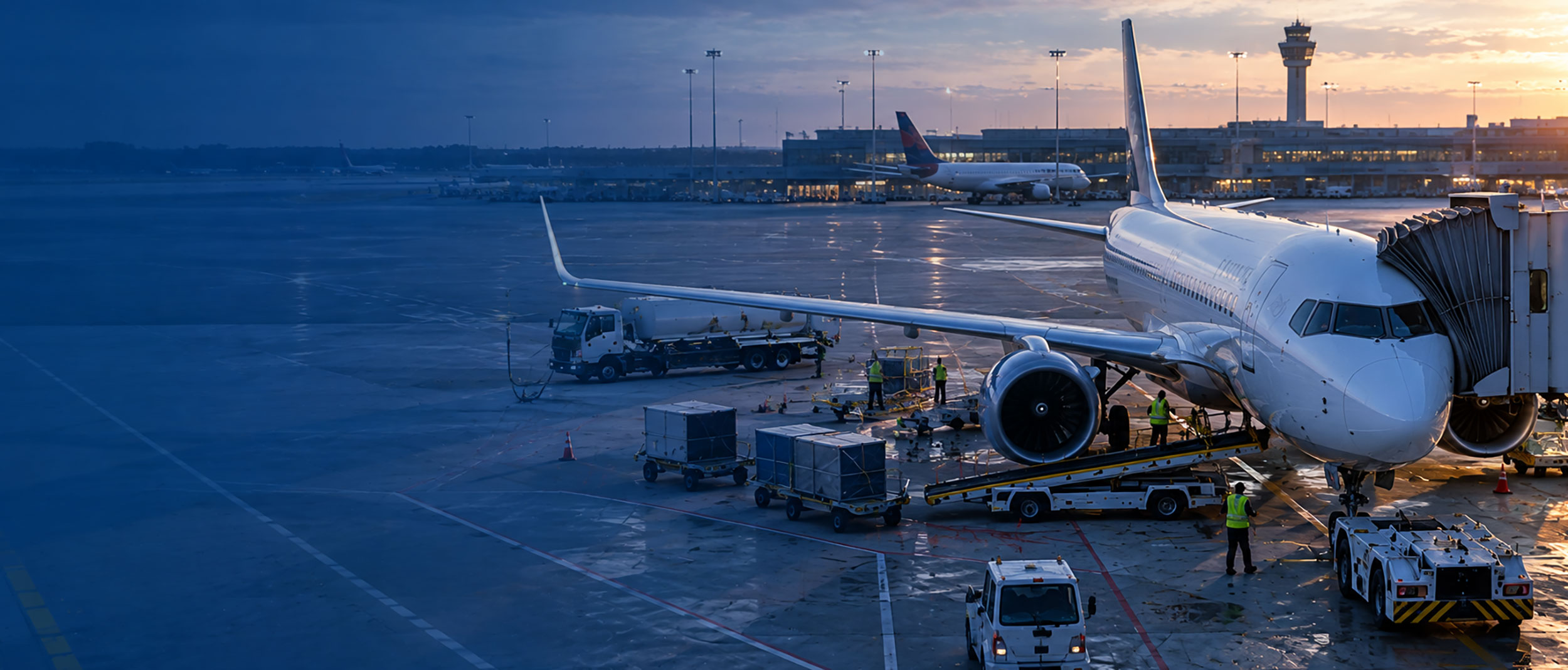
Aircraft turnaround involves a tightly coordinated sequence of activities, from loading and unloading to fueling, catering, baggage handling, pushback, and turn coordination. Each presents different opportunities for automation, intelligence, and improved operational awareness.
The conversation also explored the business case behind these investments, including safety, on-time performance, cost reduction, sustainability, and workforce productivity.
As airports, airlines, and ground handlers evaluate autonomous vehicles, AI-enabled support tools, and connected ramp technologies, the challenge is increasingly about how these technologies work together within a complex operational environment.
Data Is a Critical Part of the Smart Apron
One of the important questions explored during the session was what operational data needs to be shared across stakeholders to enable real-time situational awareness and more proactive turnaround management.
That connects directly to a theme we highlighted ahead of FTE Global: greater automation requires a clearer understanding of what is actually happening across the apron in real time. Synaptic Aviation
AI-powered computer vision can help provide that visibility by transforming existing airport camera feeds into measurable operational events and objective timestamps.
For airports, airlines, and ground handlers, this creates a more consistent picture of turnaround activity—helping teams understand when key processes begin and end, identify delays or deviations, and build the operational data foundation required for increasingly connected systems.
The smart apron is not only about automating individual activities. It is also about giving people and systems reliable information to understand the operation as it unfolds.
Automation Still Depends on People
Technology was only part of the conversation.
The panel also explored how smart ramp and smart apron advancements are affecting ground handlers, what increased automation means for frontline personnel, and how organizations can build trust in autonomous and AI-enabled systems.
Safety remains paramount in the apron environment, where aircraft, vehicles, equipment, and people operate in close proximity. As automation expands, successful adoption will depend not only on what technology can do, but also on how effectively organizations integrate it into existing operations.
That includes change management, workforce engagement, and ensuring frontline teams are part of the transition.
There Is No Single Path to the Smart Apron
Another important question raised during the session was whether the smart apron should look the same at every airport.
Airport size, infrastructure, traffic mix, existing technology, operational priorities, and investment capacity can all shape the path toward greater automation.
For some operations, the next step may involve autonomous equipment. For others, it may begin with better operational data, greater visibility, or improved coordination between stakeholders.
What matters is building the foundation that allows smarter technologies and processes to deliver measurable operational value.
Continuing the Conversation
FTE Global 2026 brought together airports, airlines, ground handlers, manufacturers, and technology providers around a shared question: What will it take to turn the smart apron from a vision into operational reality?
For Synaptic Aviation, operational visibility remains an important part of that foundation.
By turning existing airport camera infrastructure into objective operational data, AI-powered computer vision can help stakeholders better understand what is happening today while creating the data foundation for the increasingly connected and automated apron of tomorrow.
We were pleased to contribute to the discussion at FTE Global and to continue the industry conversation around safer, smarter, and more efficient aircraft turnaround operations.
Future Travel Experience Global 2026
Session: Towards the Smart Apron: Automating the Turnaround Process
September 9, 2026 | Dallas–Fort Worth, Texas